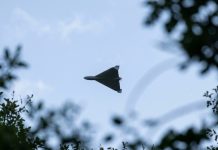
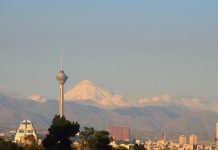
The energy war that analysts had long feared became a reality on Wednesday when Iran threatened Gulf energy infrastructure after Israel struck the South Pars gasfield — the world’s largest natural gas reserve. The Revolutionary Guards named specific facilities in Saudi Arabia, the UAE, and Qatar as targets for imminent strikes and ordered immediate evacuations. Oil prices climbed toward $110 a barrel as markets absorbed the full implications of the threat.
South Pars, shared between Iran and Qatar, sits at the heart of Iran’s gas export economy. The Israeli attack on the field — reportedly conducted with US authorization — was the first deliberate strike on Iranian fossil fuel production in the conflict. Both Washington and Tel Aviv had previously avoided this step, calculating that the economic risks of doing so outweighed the strategic benefits. That calculation had clearly changed.
Iran’s state media named the Samref refinery and Jubail complex in Saudi Arabia, al-Hosn gasfield in the UAE, and Mesaieed and Ras Laffan in Qatar as imminent targets. Workers and residents near these facilities were ordered to evacuate without delay. The governor of Asaluyeh called the US-Israeli attack “political suicide” and declared that Iran was now fully engaged in a total economic war.
Oil prices rose nearly 5% to $108.60 per barrel, while European gas markets jumped more than 7.5% to above €55.50 per megawatt hour. Gulf oil exports had already collapsed 60% from pre-war levels, battered by infrastructure attacks and Iran’s Strait of Hormuz blockade. Iran had continued to ship its own crude through the strait unimpeded while blocking its neighbors’ exports — a strategic asymmetry that had defined the conflict’s economic dimension from the beginning.
Qatar’s government spokesperson warned that attacking energy infrastructure endangered global energy security and the lives and environment of the region. The international community was scrambling to respond to a situation that had moved far beyond anyone’s early predictions. With Iran’s retaliatory window open and specific targets named, the world was watching the birth of a full-scale energy war in the planet’s most energy-critical region.