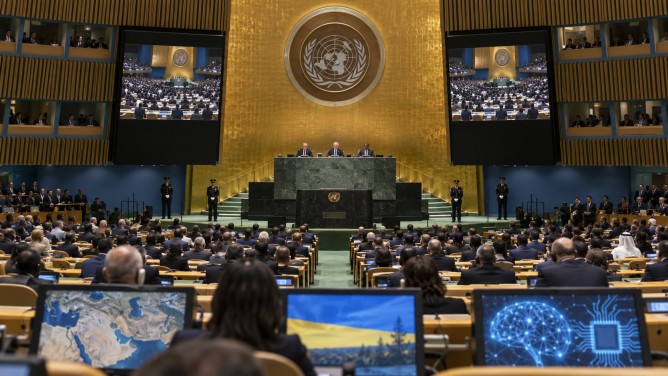
The upcoming United Nations General Assembly session in New York is set to have significant repercussions on global diplomacy, as world leaders converge to address pressing issues such as the conflicts in the Middle East and Ukraine, advancements in artificial intelligence, and the future of international cooperation. Scheduled from September 22 to 26 and on September 28, the assembly’s discussions are expected to influence international relations and policy decisions on multiple fronts.
US President Donald Trump and Ukrainian President Volodymyr Zelenskyy are among the key figures attending, with a planned meeting highlighting the ongoing diplomatic efforts surrounding Ukraine’s conflict with Russia. The war in Ukraine remains a critical focus, as the international community grapples with its humanitarian impact and implications for global food and energy security. The presence of Russia as a permanent member of the UN Security Council complicates potential resolutions, highlighting the body’s challenges in taking decisive action.
In parallel, tensions in the Middle East, particularly involving Iran, continue to pose threats to regional stability and energy supply chains. Iranian President Masoud Pezeshkian and Israeli Prime Minister Benjamin Netanyahu will both address the assembly, underscoring the importance of dialogue in a region marked by enduring conflict and diplomatic strife.
Artificial intelligence emerges as another pivotal topic, with UN Secretary-General António Guterres calling for unified international efforts to manage the rapid evolution of AI technologies. The assembly aims to explore governance frameworks and safeguards necessary to harness AI’s potential while mitigating risks.
The UN itself faces internal challenges, including financial constraints and questions regarding its crisis response capabilities. The United States recently fulfilled a $725 million payment to maintain its voting rights within the General Assembly but continues to advocate for organizational reforms and budgetary efficiencies. Against this backdrop, Guterres’ impending departure at the end of 2026 adds another layer of complexity to the ongoing discussions.