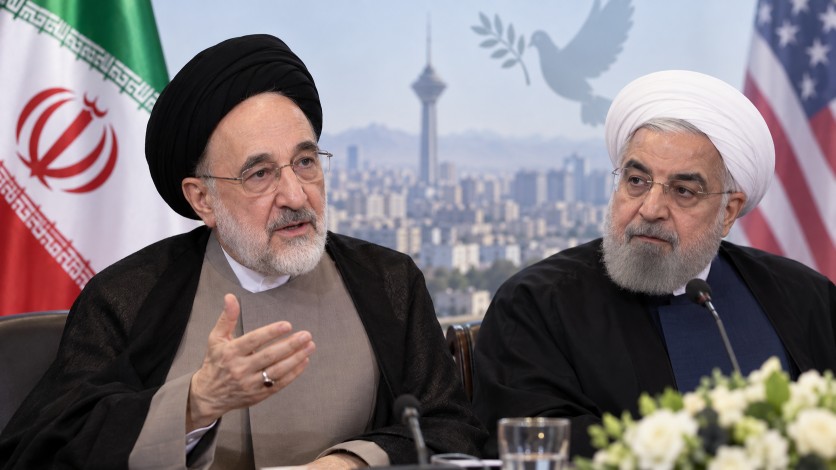
In a significant call for change, former Iranian presidents Mohammad Khatami and Hassan Rouhani have urged for a cessation of hostilities with the United States, advocating for what they term as an “honourable” peace. This appeal marks a challenge to the prevailing hardline rhetoric within Iran that emphasizes wartime postures. Rouhani has intensified this discourse by suggesting that the Iranian populace should be involved in deciding the nation’s approach towards its ongoing tensions with major world powers. During a recent meeting with ex-officials, he questioned the sustainability of maintaining confrontational policies without public support.
Khatami, echoing Rouhani’s sentiments, cautioned against ruling the nation with prolonged wartime sentiments. He has expressed support for cautious diplomacy and negotiations, stressing that Iran’s enduring national interests should overshadow any calls for persistent confrontation. However, these viewpoints have sparked backlash from Iranian hardliners. Conservative media outlets accuse the former presidents of advocating surrender, while loyalist gatherings have featured chants opposing such compromises. The hardline newspaper Kayhan has even suggested launching investigations into Khatami and Rouhani.
This debate surfaces amid increasing economic pressures on Iran. The country is grappling with rising fuel costs and dwindling oil revenues, compounding its economic woes. Moreover, tensions surrounding the strategic Strait of Hormuz continue to pose a challenge for global energy markets. Concurrently, Iranian officials have maintained a firm public stance, warning that Tehran might consider a more aggressive military strategy should diplomatic efforts with Washington falter. This raises the specter of economic pressures potentially escalating conflicts, rather than prompting immediate compromises.
Amid these tensions, there are ongoing regional diplomatic endeavors. Notably, Saudi Arabia and Iran have sustained communications regarding regional issues, with high-level officials exploring ways to mitigate further escalation and enhance regional stability. These discussions reflect a broader effort to manage tensions and prevent conflict.
The juxtaposition of these developments underscores a widening rift within Iran between advocates of diplomacy and proponents of sustained resistance. While former leaders push for negotiations and broader public engagement, the current leadership continues to signal possible military escalation if its demands remain unmet. This divide highlights the complex dynamics at play as Iran navigates its internal and external challenges.