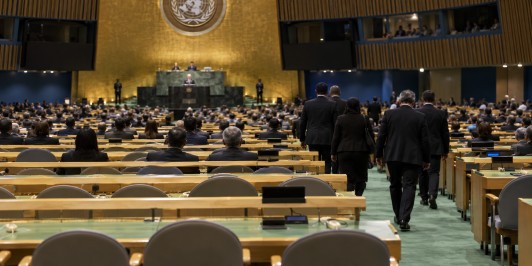
The diplomatic tensions between the United States and nations like Iran and Cuba took center stage at the United Nations General Assembly when representatives from these countries walked out during U.S. President Donald Trump’s speech. This action underscores the ongoing strains and potential ramifications on international relations and diplomatic efforts with these nations.
The Iranian delegation’s exit from the assembly hall was prompted by President Trump’s pointed remarks on U.S. military operations in Iran. He further emphasized that the U.S. might consider additional actions if a diplomatic agreement with Tehran was not achieved. This situation places Iran and the U.S. at a critical juncture, with potential military implications if talks do not progress. Iranian President Masoud Pezeshkian and Foreign Minister Abbas Araghchi, although in New York for the assembly, were not present during the speech.
Further adding to the tension, the Cuban delegation also left the chamber following Trump’s description of Cuba as a “failed state.” The U.S. president articulated his administration’s pursuit of fundamental changes on the island, suggesting that freedom would eventually be realized in Cuba and cautioning against foreign adversaries establishing a presence there. This stance reflects ongoing U.S. efforts to influence political change in Cuba, a move likely to affect diplomatic relations between the two countries.
These walkouts occurred during a broader speech where President Trump outlined his administration’s stances on critical international issues. His comments on Iran and Cuba were part of a larger narrative presented to world leaders, highlighting the U.S.’s strategic and diplomatic priorities on the global stage. The reactions from the Iranian and Cuban delegations signal the significant challenges and diplomatic sensitivities involved in U.S. foreign policy, particularly concerning nations with which it has strained relationships.