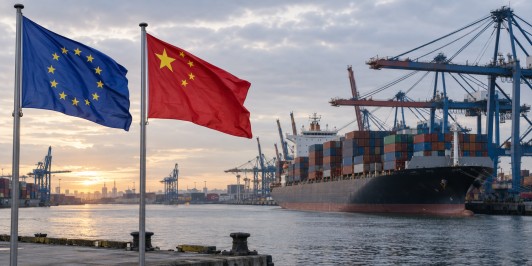
The European Union is increasingly feeling the economic strain from its widening trade deficit with China, which surged to €36.5 billion in July 2026. This growing imbalance highlights the EU’s heavy reliance on Chinese imports, prompting officials to explore measures that could recalibrate trade dynamics, particularly in key sectors like hybrid vehicles and chemicals.
July’s figures revealed a significant disparity, with EU imports from China reaching €53.9 billion, a year-on-year increase of 8%, while exports to China dwindled by 1.6% to €17.4 billion, according to Eurostat data. This trend has exacerbated the EU’s trade deficit, which stood at €32.3 billion in the same month the previous year. Cumulatively, from January through July 2026, the deficit has ballooned to approximately €234 billion.
The persistent trade imbalance is pushing the EU to reconsider its economic relationship with China. One particular area of concern is the automotive sector, where imports of hybrid vehicles from China have surged. This increase follows the EU’s imposition of additional tariffs on Chinese electric vehicles in 2024, which did not apply to hybrid models. In response, European officials are contemplating steps to curb such imports, potentially through voluntary export limits on Chinese hybrid vehicles.
The trade tension is expected to be a central topic in upcoming discussions between the EU and China. European leaders aim to enhance their export capabilities while simultaneously reducing reliance on Chinese goods, especially in strategic sectors crucial to the bloc’s economic stability. As these talks progress, the EU’s strategies will likely focus on balancing trade relations and securing a more favorable position in the global market.