When the US-Israel offensive against Iran began, it was widely described as one of the most tightly coordinated military operations in recent history. Weeks later, it looks considerably more complicated. A public disagreement over Israel’s strike on the South Pars gas field, a dispute over what Washington knew and when, diverging strategic objectives acknowledged on the congressional record, and a growing list of Israeli actions that exceed American endorsement — all point to an alliance that has evolved from seamless coordination toward something more contested and complex.
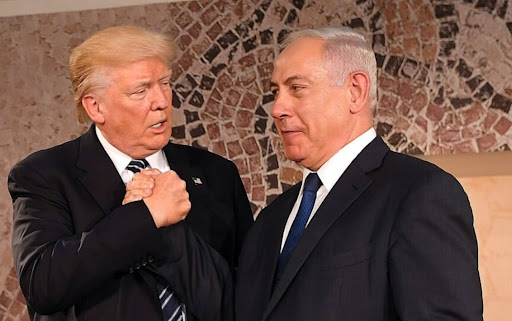
US President Donald Trump’s comment that he had told Israeli Prime Minister Benjamin Netanyahu not to carry out the South Pars strike was the clearest signal of that evolution. It came during an Oval Office meeting with Japan’s Prime Minister — a setting that amplified its international visibility. The comment was not angry or threatening, but it was public, specific, and direct. It established a new data point for understanding how the alliance actually functions under pressure.
Netanyahu’s response was to accept a narrow limitation while defending the broader principle of Israeli strategic independence. His public language was deferential; his operational posture was not. He agreed not to hit the gas field again — but confirmed that the initial decision to hit it was Israel’s alone. The exchange illustrated the limits of American influence over Israeli military decisions in real time.
The strategic divergence underlying the episode — Trump’s nuclear-containment focus versus Netanyahu’s regional-transformation ambitions — was confirmed by Director of National Intelligence Tulsi Gabbard in congressional testimony. It is no longer merely observable in targeting patterns or inferred from rhetoric; it has been stated officially by a senior American intelligence figure. The campaign that began as a closely coordinated effort is now acknowledged to be something more complicated than that.
Whether that complexity strengthens or weakens the alliance depends on how both governments manage it going forward. The South Pars episode was managed without a deep rupture. Future episodes will test the management machinery again. As long as the strategic gap between the two leaders persists — and there is little sign it is narrowing — the contest between coordination and divergence will continue to define the character of this war.