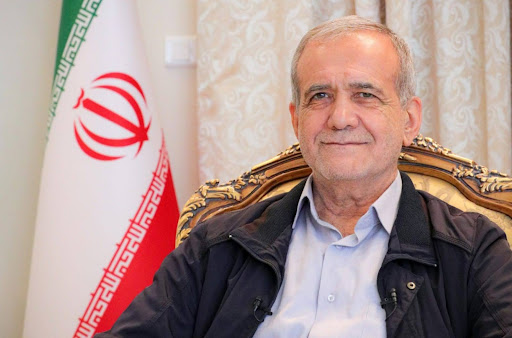
Iranian President Masoud Pezeshkian delivered a pointed message to Gulf countries this week, linking their own security and development to their decision to either allow or prevent enemy forces from operating on their land. The statement came as fighting between Iran and the United States stretched past the one-month mark. The warning added a new dimension to a conflict that has increasingly pulled the broader Gulf region into its wake.
The war has drawn in multiple Gulf nations, as the United States operates military bases in Saudi Arabia, the UAE, Kuwait, Qatar, and Oman. Strikes on Iran have been launched from these locations, prompting Tehran to target those countries in response. The cycle of attack and retaliation has placed significant pressure on Gulf governments to reassess their roles in the conflict.
Pezeshkian took to social media to reiterate Iran’s defensive military doctrine, stating that the country does not engage in preemptive warfare but will respond with full force if its critical infrastructure is targeted. He urged Gulf neighbours to take responsibility for the activities conducted from their territories. The president argued that permitting enemy forces to wage war from Gulf lands was incompatible with the region’s aspirations for peace and progress.
Pakistan’s Prime Minister Shehbaz Sharif has taken an active role in mediating the conflict, travelling to meet regional leaders and facilitating dialogue. Following his conversation with Pezeshkian, Sharif stated that the Iranian president sees the establishment of trust as a prerequisite for negotiations. Pakistan’s foreign ministry confirmed that Islamabad’s mediation efforts have received warm acknowledgement from Tehran.
A significant diplomatic gathering is underway in Pakistan, with the foreign ministers of Saudi Arabia, Egypt, and Turkey holding talks aimed at calming regional tensions. The discussions include a planned meeting with Prime Minister Sharif and Pakistani Foreign Minister Ishaq Dar. The convergence of these diplomatic efforts points to a shared regional desire to find a path out of the conflict.